
Pioneering an ultrasensitive biosensor for early cancer detection
The detection of cancer in its early stages can greatly increase the chances of patient recovery. However, current screening methods have several limitations, such as low sensitivity, high false-positive rates and lack of specificity. In addition, they are time-consuming and expensive. Supported by the Marie Skłodowska-Curie Actions programme, the HSAFE project aims to address these challenges by developing an ultrasensitive diagnostic tool that can detect and identify lung and lymphoma cancer cells at an early development stage. To do so, it brings together an international consortium of scientists and engineers who will share their experience and knowledge to construct a state-of-the-art biosensor based on an avalanche field-effect transistor array and novel 2D materials
The objective of project
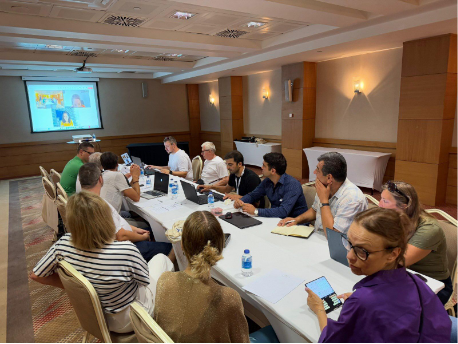
The focus of the HSAFE project, which aligns with the specific objectives of the Marie Curie SE-2024 call, is to develop an ultrasensitive diagnostic tool necessary for the identification and detection of lung and lymphoma cancer cells at an earlier stage of development. Early detection significantly increases the chances of a complete cure for the patient. The project proposes to produce a new biosensor based on an avalanche FET array and innovative 2D materials to overcome some disadvantages of traditional cancer detection methods, such as being time-consuming, expensive, and lacking in sensitivity and specificity. The successful implementation of the project will be ensured by sharing the experience and knowledge gained in the fields of physics, technology, and engineering in a coordinated manner. Strengthening modern knowledge in the field of sensors and applying modern technological approaches and methods will be achieved through the international cooperation of highly qualified scientists and engineers from Azerbaijan, the Czech Republic, Hungary, Portugal, Poland, Turkey, and Ukraine. This consortium will address both technological (e.g. micro-sized sensor design, biosensor reader production) and fundamental (e.g. innovative material synthesis, internal avalanche amplification mechanisms of ultra-weak signals, biomarker immobilization process) issues.