NEW BURIED-PIXEL MAPD DESIGN SUCCESSFULLY PRODUCED IN TÜRKIYE
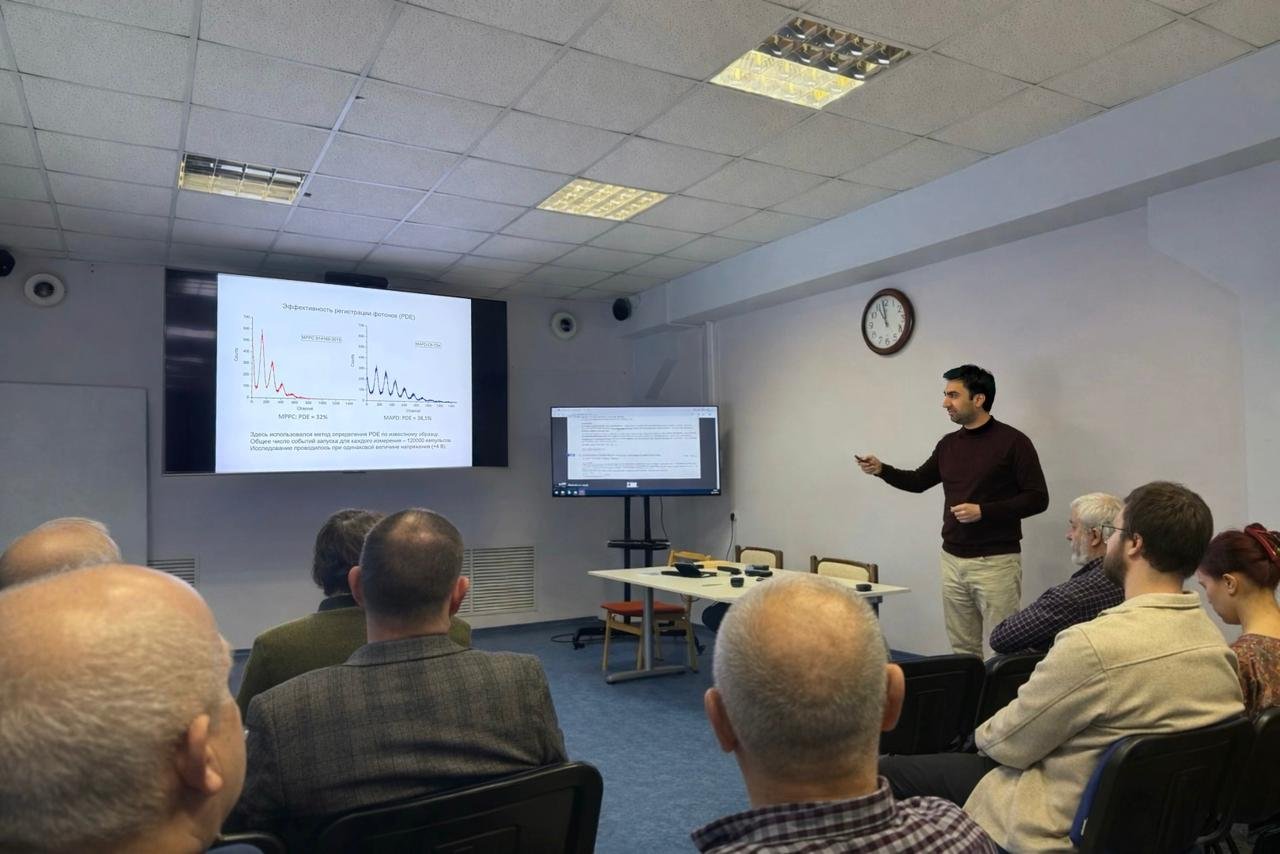
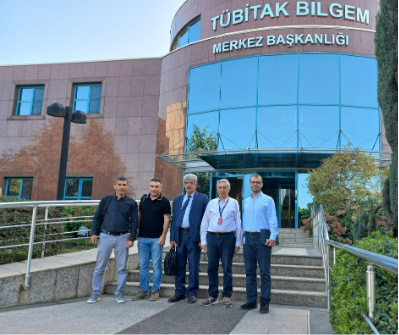
The next stage in the production of Micro-Pixel Avalanche Photodiodes (MAPDs) has been successfully completed by Azerbaijani scientists, together with the INNMEDSCAN and DETMED project consortia, at the YITAL laboratory of TÜBİTAK-BİLGEM. The development was carried out by specialists from the Institute of Physics and the Nuclear Research Department of IDDA, marking a historic milestone for Türkiye: this is the first time that buried-pixel structure avalanche photodiodes have been produced in the country. The newly fabricated MAPDs have compact dimensions and belong to a class of photodetectors currently regarded among the most sensitive in the world, combining high internal gain with dense pixel architecture. The successful implementation of a buried-pixel MAPD architecture—known for enhanced optical isolation, reduced crosstalk, and improved timing performance—opens new technological prospects for high-precision photon detection. Thanks to their performance characteristics, the developed MAPD-TR photodiodes show strong potential for applications in:
- medicine and nuclear imaging,
- high-energy and particle physics,
- space and aerospace research,
- security and defense technologies,
- robotics and intelligent sensing systems.
This achievement was made possible through financial and organizational support from the INNMEDSCAN and DETMED projects, bringing together an international consortium of academic and industrial partners. The successful first-time realization of buried-pixel avalanche photodiodes in Türkiye not only highlights the growing role of Azerbaijani scientific expertise in advanced semiconductor technologies, but also lays a strong foundation for future joint research, pilot production, and international technology transfer.